
Karnataka State Police Constable (Civil) Direct Recruitment 2026: Complete Guide for Aspirants

ALT TEXT: Karnataka Police Constable Recruitment 2026 notification with online application start date June 8 and civil police constable vacancies

 Karnataka Police Constable Recruitment 2026: Golden Opportunity for Government Job Seekers

The Karnataka State Police (KSP) Department has announced a major recruitment drive for Police Constable (Civil) posts in 2026, creating a significant opportunity for candidates aspiring to serve the state and build a stable government career. Every year, thousands of young men and women prepare for police recruitment examinations, and the Karnataka Police Constable Direct Recruitment 2026 is expected to attract a large number of applicants from across the state.

For candidates who dream of wearing the khaki uniform and contributing to public safety, this recruitment drive offers a direct pathway into one of Karnataka’s most respected government departments. With attractive salary packages, job security, promotion opportunities, and social prestige, the Police Constable (Civil) position remains one of the most sought-after government jobs in Karnataka.

About Karnataka State Police Department

The Karnataka State Police Department is responsible for maintaining law and order, preventing crime, ensuring public safety, and protecting citizens throughout the state. Operating under the Home Department of the Government of Karnataka, the police force plays a vital role in ensuring peace and security.

Police Constables serve as the backbone of the department. They perform field duties, assist senior officers during investigations, manage crowd control, enforce laws, and support various public safety initiatives.

Karnataka Police Constable (Civil) Recruitment 2026 Overview

The Karnataka Police Constable (Civil) Direct Recruitment 2026 aims to fill a large number of vacancies across various districts and police units in Karnataka. The recruitment process is expected to be conducted through a transparent and merit-based selection system.

Key Highlights

Organization: Karnataka State Police (KSP)
Post Name: Police Constable (Civil)
Job Location: Karnataka
Application Mode: Online (KEA website)
Category: State Government Job
Selection Process: Written Examination, Physical Tests, Document Verification, and Medical Examination
Salary: As per Karnataka Government pay scale and allowances (ranges from ₹37,500 to ₹76,100 per month)
Eligibility: PUC/12th Pass or equivalent qualification


Important Dates

  • Notification Release Date: June 2026
  • Online Application Start Date: 08 June 2026
  • Last Date to Apply: 03 July 2026
  • Exam Date: 02 August
  • Admit Card Release: To Be Announced


Important Links

Karnataka Police Constable (Civil) Vacancy Details 2026

RPC / Non-Kalyana Karnataka (NHK): 3,395 Posts
Kalyana Karnataka (HK/KK): 596 Posts

Total: 3,991 Posts

Educational Qualification

Candidates applying for Karnataka Police Constable (Civil) Recruitment 2026 should have completed:

PUC (12th Standard) from a recognized board, or
Equivalent educational qualification recognized by the Government.

Applicants should carefully verify the official notification for specific educational requirements before applying.

Age Limit

The age criteria generally vary according to category reservations.

Typical age requirements include:

Minimum Age: 19 years
Maximum Age: 25 years for General Category
Age relaxation for SC, ST, OBC, and other reserved categories as per Karnataka Government rules

Candidates should refer to the official notification for exact age calculations and category-wise relaxations.

Selection Process for Karnataka Police Constable

The Karnataka Police Constable (Civil) selection process is designed to evaluate both academic knowledge and physical fitness.

1. Written Examination

The written examination usually tests candidates on:

* General Knowledge
* Current Affairs
* Indian Constitution
* Karnataka History and Geography
* Reasoning Ability
* Mental Ability

Candidates should regularly read newspapers and practice mock tests to improve their performance.

2. Physical Standard Test (PST)

Applicants must satisfy prescribed physical standards such as:

* Height requirements
* Chest measurements (for male candidates)
* Weight and physical fitness standards

The standards may vary based on category and reservation rules.

3. Endurance Test (ET)

Physical endurance is a crucial requirement for police service. Candidates are expected to participate in running and other fitness-related activities to demonstrate stamina and physical capability.

 4. Document Verification

Candidates who clear the written and physical tests must submit original documents for verification.

Required documents generally include:

* SSLC Marks Card
* PUC Marks Card
* Aadhaar Card
* Caste Certificate (if applicable)
* Income Certificate (if applicable)
* Passport-size Photographs

5. Medical Examination

The final stage involves a medical fitness test conducted by authorized medical professionals to ensure candidates are physically fit for police service.

Karnataka Police Constable Salary and Benefits

One of the major attractions of Karnataka Police jobs is the competitive salary structure.

Selected candidates receive:

* Basic Pay
* Dearness Allowance (DA)
* House Rent Allowance (HRA)
* Travel Allowance (TA)
* Medical Benefits
* Pension and Retirement Benefits as per government rules
* Promotion Opportunities

Apart from financial benefits, police personnel enjoy social respect and long-term job security.

How to Apply for Karnataka Police Constable Recruitment 2026

Candidates can apply online by following these steps:

1. Visit the official Karnataka Examination Authority (KEA) website.
2. Open the Police Constable (Civil) Recruitment 2026 notification.
3. Read all instructions carefully.
4. Complete the online registration process.
5. Fill in personal, educational, and communication details.
6. Upload required documents and photographs.
7. Pay the application fee, if applicable.
8. Submit the application form.
9. Download and print the application confirmation page.

Applicants should keep copies of all submitted documents for future reference.

Preparation Tips for Karnataka Police Constable Exam 2026

Competition for police jobs is increasing every year. Candidates should begin preparation early.

Study Strategy

* Follow a daily study schedule.
* Focus on Karnataka General Knowledge.
* Read current affairs regularly.
* Practice reasoning questions.
* Solve previous years’ question papers.

Physical Fitness Preparation

* Practice daily running.
* Improve stamina through regular exercise.
* Maintain a healthy diet.
* Follow a disciplined fitness routine.

Consistent preparation can significantly improve the chances of success.

Why Choose a Career in Karnataka Police?

Joining Karnataka Police is more than securing a government job. It provides an opportunity to serve society, protect citizens, and contribute to public welfare. Police personnel gain valuable experience, leadership skills, and career growth opportunities throughout their service.

For young aspirants looking for a respected and rewarding profession, the Karnataka Police Constable (Civil) Recruitment 2026 offers an excellent career path.

Final Words

The Karnataka Police Constable (Civil) Direct Recruitment 2026 presents a promising opportunity for candidates seeking government employment in Karnataka. With a structured selection process, attractive salary package, and long-term career prospects, this recruitment drive is expected to attract thousands of applicants.

Interested candidates should regularly monitor official recruitment announcements, prepare thoroughly for the written examination and physical tests, and submit their applications before the deadline. A disciplined approach, dedication, and consistent preparation can help aspirants achieve their dream of joining the Karnataka State Police force.
SSC CGL 2026 New Exam Pattern: Complete Guide for Tier 1 & Tier 2 (Latest Changes Explaine

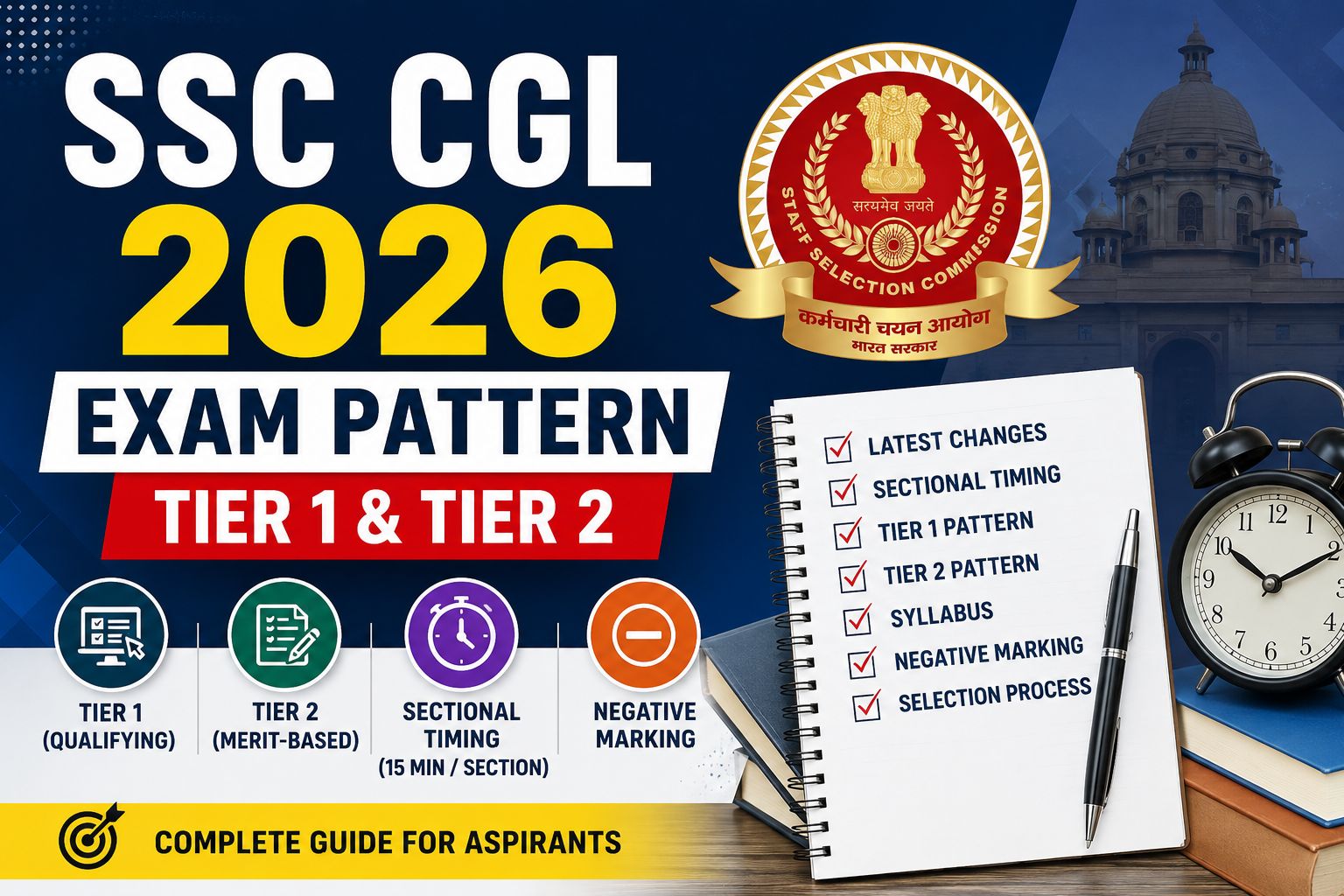
SSC CGL 2026 Exam Pattern Tier 1 and Tier 2 Latest Changes, Sectional Timing and Negative Marking Guide

If you are preparing for SSC CGL 2026, understanding the latest exam pattern is the first step toward success. The Staff Selection Commission has introduced some important changes in SSC CGL 2026, including sectional timing, which has changed the way aspirants need to approach the examination. Many candidates are confused about whether Tier 1 marks are counted, how Tier 2 works, negative marking, sectional timings, and which papers are compulsory.

This detailed guide covers every major aspect of the SSC CGL 2026 Exam Pattern so that you don’t need to search elsewhere.


SSC CGL 2026 Selection Process

The SSC CGL 2026 recruitment process consists of:

Stage 1: Tier 1 (Qualifying)

Candidates must clear Tier 1 to become eligible for Tier 2.

Stage 2: Tier 2 (Merit-Based)

Final selection is based mainly on Tier 2 performance.

In simple words:

Tier 1 = Qualifying Stage

Tier 2 = Rank Deciding Stage

Document Verification

Final Selection

SSC has notified around 12,256 vacancies for various Group B and Group C posts.


SSC CGL Tier 1 Exam Pattern 2026

Tier 1 is conducted in online Computer Based Test (CBT) mode.

Subject Questions Marks

SUBJECT No. of QuestionsMarks
General Intelligence & Reasoning 25 50
General Awareness 25 50
Quantitative Aptitude 25 50
English Comprehension 25 50
Total 100 200

Duration

Total Time: 60 Minutes

New Sectional Timing: 15 Minutes for each section

This is one of the biggest changes in SSC CGL 2026. Once 15 minutes for a section ends, candidates automatically move to the next section and cannot return.

Marking Scheme

Correct Answer: +2 Marks

Wrong Answer: -0.50 Marks

Unattempted: 0 Marks


Major Change in SSC CGL 2026: Sectional Timing

Previously, candidates could freely move between sections during the exam.

Now SSC has introduced:

15 minutes for Reasoning

15 minutes for General Awareness

15 minutes for Quantitative Aptitude

15 minutes for English

This means:

✔ Time management becomes more important.

✔ You cannot compensate later if you waste time in one section.

✔ Every section must be practiced separately.

Many aspirants consider this the biggest change in SSC CGL 2026.


Is Tier 1 Qualifying or Merit-Based?

This is the most common doubt among aspirants.

Answer:

Tier 1 is qualifying in nature.

Its primary purpose is to shortlist candidates for Tier 2.

However, scoring high in Tier 1 is still important because cutoff marks determine whether you qualify for the next stage.


SSC CGL Tier 2 Exam Pattern 2026

Tier 2 is the most important stage because final merit is prepared using Tier 2 scores.

Paper I is compulsory for all candidates.

Additional papers are conducted only for specific posts.


Tier 2 Paper I (Compulsory for Everyone)

Paper I is divided into multiple sections.

Section I

Mathematical Abilities

30 Questions

Reasoning & General Intelligence

30 Questions


Section II

English Language & Comprehension

45 Questions

General Awareness

25 Questions


Section III

Computer Knowledge Test

20 Questions


Session II

Data Entry Speed Test (DEST)

Candidates must type approximately 2000 key depressions within the given time.

DEST is qualifying in nature.


Tier 2 Paper II

Applicable only for:

Junior Statistical Officer (JSO)

Statistical Investigator Grade-II

Pattern

100 Questions

200 Marks

2 Hours Duration


Tier 2 Paper III

Applicable only for:

Assistant Audit Officer (AAO)

Assistant Accounts Officer (AAO)

Subject

General Studies (Finance & Economics)

Pattern

100 Questions

200 Marks

2 Hours Duration


Negative Marking in SSC CGL Tier 2

Many aspirants lose marks due to excessive guessing.

Paper I

Wrong Answer: -1 Mark in major sections

Paper II & III

Wrong Answer: -0.50 Marks

Therefore, blind guessing can significantly reduce your score.


Which Subjects Require Maximum Attention?

Based on previous trends and the latest pattern:

High-Scoring Sections

English

Reasoning

Rank-Deciding Sections

Quantitative Aptitude

General Awareness

Most toppers recommend strengthening Maths because it creates the biggest score difference among candidates.


SSC CGL 2026 Preparation Strategy According to New Pattern

1. Practice Section-Wise Mocks

Because of sectional timing, solving full papers alone is not enough.

Practice:

15-minute Reasoning Tests

15-minute English Tests

15-minute GA Tests

15-minute Maths Tests


2. Focus More on Speed

The new pattern rewards candidates who can quickly identify easy questions.


3. Avoid Guesswork

Negative marking can reduce your score drastically.

Attempt only questions where you have reasonable confidence.


4. Improve Computer Knowledge

Many candidates ignore the Computer Knowledge module.

Since it is compulsory, basic computer concepts should be covered thoroughly.


5. Regular Mock Analysis

Taking mocks is important.

Analyzing mistakes is even more important.

Maintain a notebook for:

Calculation mistakes

Concept mistakes

Silly errors


Frequently Asked Questions (FAQs)

Is SSC CGL 2026 Tier 1 qualifying?

Yes. Tier 1 is qualifying in nature and is used to shortlist candidates for Tier 2.

Is there sectional timing in SSC CGL 2026?

Yes. SSC has introduced sectional timing for Tier 1, giving 15 minutes to each section.

How many questions are there in Tier 1?

100 Questions for 200 Marks.

What is the negative marking in Tier 1?

0.50 marks are deducted for every incorrect answer.

Is Tier 2 compulsory?

Yes. Tier 2 is compulsory and decides the final merit ranking.

Which paper is compulsory in Tier 2?

Paper I is compulsory for all candidates.


Conclusion

SSC CGL 2026 has become more competitive with the introduction of sectional timing. Aspirants can no longer rely solely on overall speed; they must perform efficiently in every section within the allotted time. Tier 1 remains a qualifying stage, while Tier 2 determines final selection. Candidates who focus on Maths, English, Computer Knowledge, and sectional mock practice will have a significant advantage.

With more than 12,000 vacancies and a revised exam pattern, SSC CGL 2026 presents a major opportunity for graduates aiming for prestigious central government jobs. The key to success is understanding the pattern early, preparing strategically, and practicing consistently.

​RRB ALP Notification 2026 Out: Check 11,127 Vacancies, Exam Dates, Eligibility, and How to Apply Online

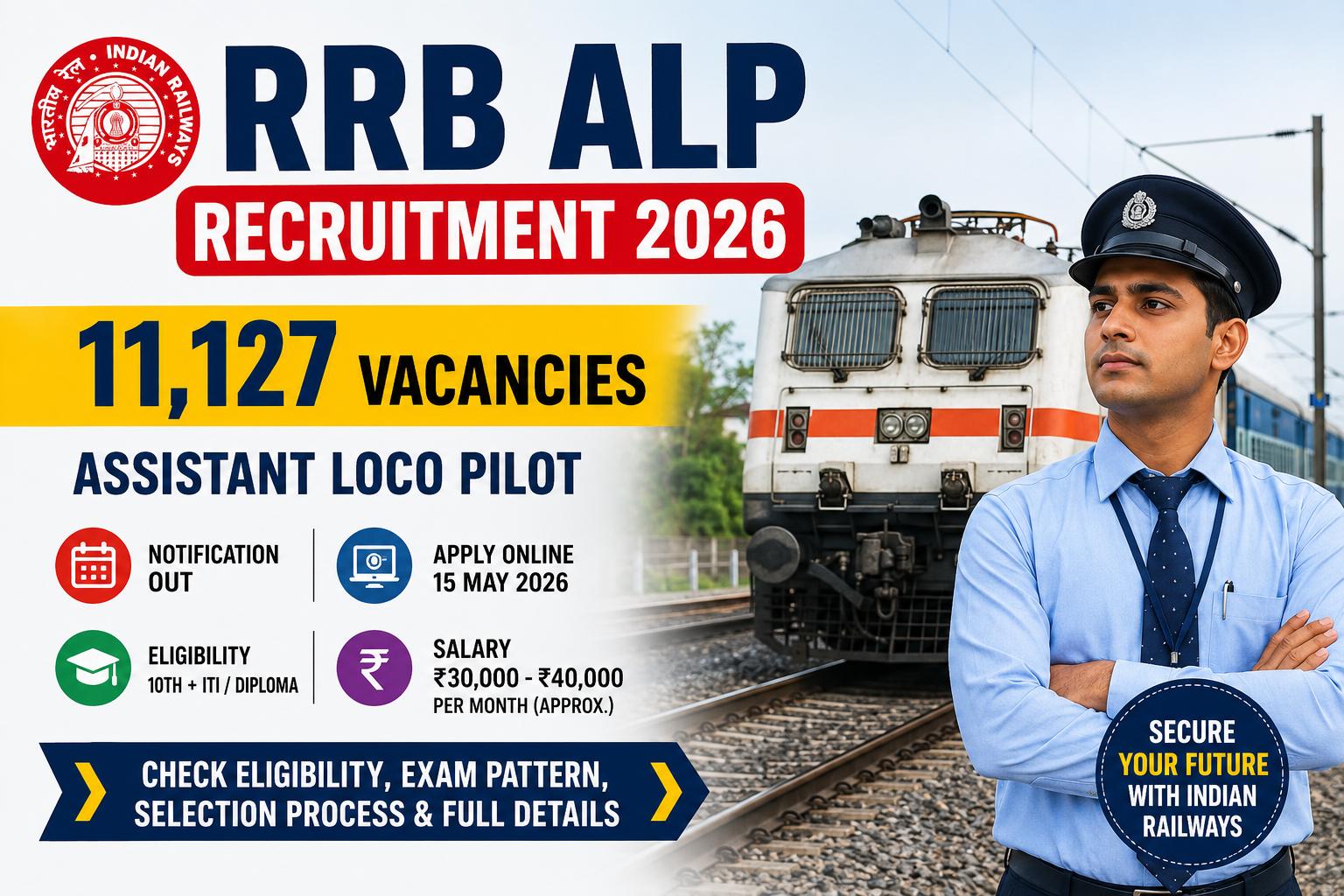
RRB ALP Recruitment 2026 notification showing 11127 Assistant Loco Pilot vacancies in Indian Railways with eligibility, salary and application details.

​The Ministry of Railways, via the Railway Recruitment Boards (RRBs), has officially released the detailed Centralised Employment Notice (CEN) No. 01/2026 for the recruitment of Assistant Loco Pilot (ALP). This year, the Indian Railways has announced a massive wave of opportunities with 11,127 vacant positions across various railway zones.
​For lakhs of government job aspirants with a technical background, this is one of the most highly anticipated recruitment drives of the year. If you dream of operating locomotives and building a stable, high-growth career with the Indian Railways, now is the time to act.
​This comprehensive guide breaks down everything you need to know about the RRB ALP 2026 Notification, including important dates, eligibility criteria, zone-wise vacancies, selection process, exam pattern, and step-by-step application instructions.

What is RRB ALP?

The full form of ALP is Assistant Loco Pilot. An ALP works under the Loco Pilot and helps in operating trains safely and efficiently. It is one of the most popular technical jobs in Indian Railways.
The recruitment is conducted by the Railway Recruitment Boards under the Ministry of Railways, Government of India.

RRB ALP Notification 2026 Overview

ParticularsDetails
Recruitment Name RRB ALP Recruitment 2026
Conducting Body Railway Recruitment Board (RRB)
Post Name Assistant Loco Pilot (ALP)
Job Location Across India
Job Category Central Government (Indian Railways)
Application Mode Online Only
Selection Process CBT 1, CBT 2, CBAT, Document Verification
Official Website Indian Railways RRB Portal
Notification Number CEN No. 01/2026
Total Vacancies 11,127 Posts
Pay Level Level 2 (7th CPC Pay Matrix)
Initial Pay Scale ₹19,900/- plus allowances


RRB ALP 2026 Important Dates

Notification Date: May 14, 2026

​​​Application Start Date: May 15, 2026
​Last Date to Apply : June 14, 2026 (up to 23:59 Hrs)
​Last Date for Application Fee Payment: June 16, 2026
​Application Correction/Modification Window: June 17, 2026, to June 26, 2026
​CBT 1 Exam Date: To be notified soon (Tentatively August 2026)

​Important Note: A candidate is permitted to apply to only one RRB zone, and only a single online application form per candidate will be accepted. Submitting multiple applications will lead to rejection.


RRB ALP Recruitment 2026: Important Links

​To help you save time, we have aggregated all the essential official links for the CEN No. 01/2026 recruitment cycle below. Ensure you only download notifications and apply through these authenticated government platforms:

Official Online Application Portal: https://www.rrbapply.gov.in

Download Official Detailed Notification PDF: https://www.rrbcdg.gov.in/uploads/2026/01-ALP/012026ALP-CEN.pdf

​Official Central Railway Website: https://indianrailways.gov.in/

Note: All RRB ZONE official links given last of this article 

Total Vacancies & Post Details

​The 11,127 vacancies are distributed across 21 regional Railway Recruitment Boards nationwide. These vacancies are split among various categories including General (UR), OBC (NCL), SC, ST, and EWS. The detailed zone-wise break-up is made available in Annexure-B of the official PDF notification on regional RRB web portals (such as RRB Ajmer, RRB Chandigarh, RRB Secunderabad, etc.).


Eligibility Criteria for RRB ALP 2026

​To clear the scrutiny stage, candidates must fulfill the strict age, educational, and medical eligibility requirements laid down by the Ministry of Railways.

​1. Educational & Technical Qualification

​Candidates must possess Matriculation/SSLC (Class 10th pass) along with one of the following technical qualifications from a recognized institute (NCVT/SCVT):

​ITI (Industrial Training Institute) Certification in relevant trades such as Fitter, Electrician, Instrument Mechanic, Millwright/Maintenance Mechanic, Mechanic (Radio & TV), Electronics Mechanic, Mechanic (Motor Vehicle), Wireman, Tractor Mechanic, Armature & Coil Winder, Mechanic (Diesel), Heat Engine, Turner, Machinist, or Refrigerator & AC Mechanic.

​Diploma in Engineering: A 3-year Diploma in Mechanical, Electrical, Electronics, or Automobile Engineering.

​Degree in Engineering: A B.E. or B.Tech degree in the branches specified above in lieu of an ITI or Diploma.

​2. Age Limit (As of July 1, 2026)

​The basic age limit for the unreserved categories is 18 to 30 years. However, age relaxations are applicable for reserved categories according to government guidelines:

​OBC (Non-Creamy Layer): Upper age relaxation up to 33 years.

SC / ST: Upper age relaxation up to 35 years.

​Ex-Servicemen: As per prevailing Railway guidelines.

​3. Medical Standards (A-1 Category)

​The Assistant Loco Pilot role demands exceptional physical fitness, especially regarding eyesight. Candidates must meet the A-1 Medical Standard:

​General Fitness: Physically fit in all aspects.

​Distant Vision: 6/6, 6/6 without glasses (Lens/spectacles are strictly prohibited).

​Near Vision: Sn. 0.6, 0.6 without glasses.

Must Pass Tests For: Color Vision, Binocular Vision, Field of Vision, Night Vision, and Mesopic Vision.


RRB ALP Selection Process 2026

​Cracking the RRB ALP exam requires clearing 5 distinct phases. The continuous evaluation ensures that only mentally and physically competent individuals operate high-speed trains.

First Stage (CBT-1): This acts as a screening/filtering layer. Marks scored in CBT-1 are not counted toward final merit calculation.

​Second Stage (CBT-2): Candidates 15 times the number of vacancies per RRB zone will be shortlisted for CBT-2 based on their CBT-1 performance.

​CBAT (Psycho Test): Only for those who qualify the core sections of CBT-2.

​Document Verification & Medical Exam: The final checks before generating the appointment letter.


Exam Pattern & Marking Scheme

​To strategize your preparation, you must thoroughly understand the blueprint of both online examinations.

CBT-1 Exam Pattern

​Total Questions: 75 Questions

​Total Duration: 60 Minutes (1 Hour)

​Negative Marking: 1/3rd of the assigned mark will be deducted for every incorrect response.

Sections: Mathematics, Mental Ability/Reasoning, General Science, and General Awareness on Current Affairs.

CBT-2 Exam Pattern

​CBT-2 is divided into two distinct parts conducted in a single session lasting 2 Hours and 30 Minutes for a total of 175 questions.

​Part A (100 Questions | 90 Minutes): Includes Mathematics, General Intelligence & Reasoning, and Basic Science & Engineering. Crucial note: Your performance in Part A forms the primary basis for shortlisting candidates for the CBAT phase.

​Part B (75 Questions | 60 Minutes): This is a qualifying test focusing entirely on your chosen relevant trade subject. Candidates must secure a minimum qualifying score of 35% in Part B to even have their Part A marks evaluated.


Regional RRB Websites (Zone-Wise Links)

​Candidates must apply to only one regional board. Use the official text links below to check specific localized updates, seat divisions, and admit card statuses:

RRB Ahmedabad: https://rrbahmedabad.gov.in/

​RRB Ajmer: https://rrbajmer.gov.in/

​RRB Bengaluru: http://www.rrbbnc.gov.in/

​RRB Bhopal: https://rrbbhopal.gov.in/

​RRB Bhubaneswar: https://www.rrbbbs.gov.in/

​RRB Bilaspur: http://rrbbilaspur.gov.in/

​RRB Chandigarh: https://www.rrbcdg.gov.in/

​RRB Chennai: https://rrbchennai.gov.in/

​RRB Gorakhpur: https://www.rrbgkp.gov.in/

​RRB Guwahati: https://www.rrbguwahati.gov.in/

​RRB Jammu-Srinagar: https://www.rrbjammu.nic.in/

​RRB Kolkata: https://www.rrbkolkata.gov.in/

​RRB Malda: https://rrbmalda.gov.in/

​RRB Mumbai: https://www.rrbmumbai.gov.in/

​RRB Muzaffarpur: https://rrbmuzaffarpur.gov.in/

​RRB Patna: https://www.rrbpatna.gov.in/

​RRB Prayagraj (Allahabad): https://rrbpryj.gov.in/

​RRB Ranchi: https://www.rrbranchi.gov.in/

​RRB Secunderabad: https://rrbsecunderabad.gov.in/

​RRB Siliguri: https://www.rrbsiliguri.gov.in/

​RRB Thiruvananthapuram: https://www.rrbthiruvananthapuram.gov.in/

SSC Selection Post Phase 14 Syllabus and Exam Pattern 2026: The Complete Guide

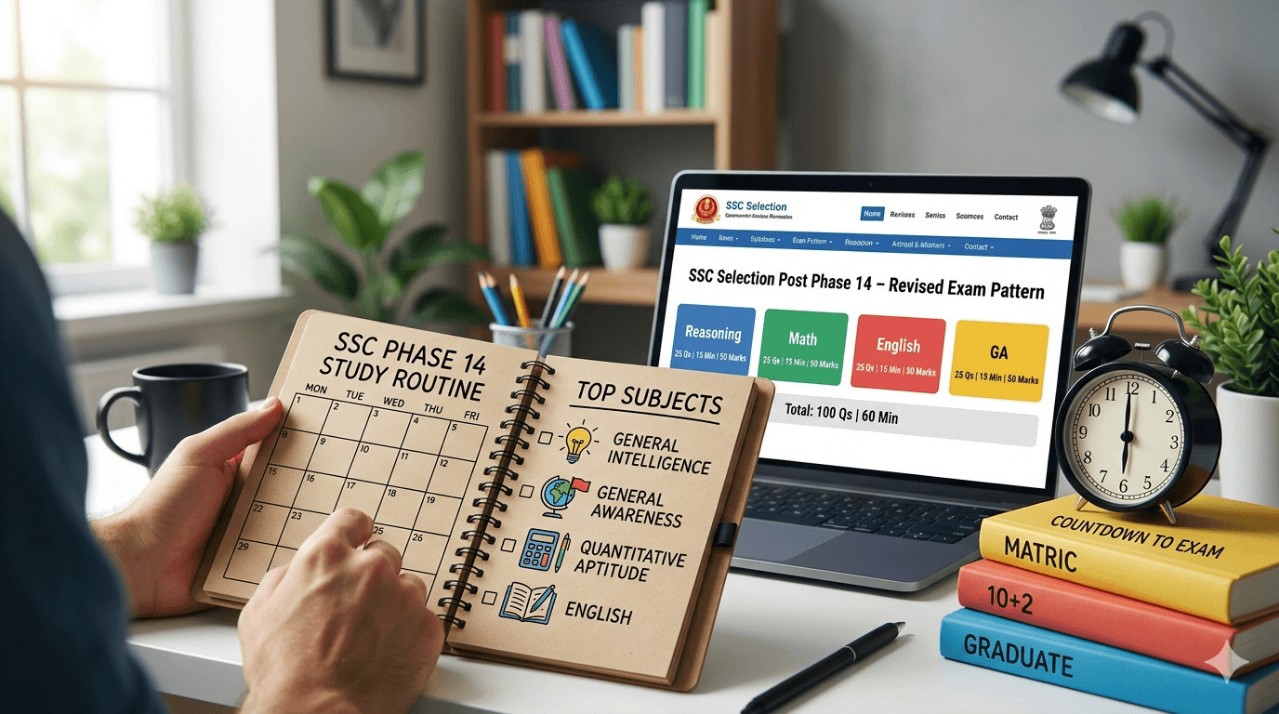
SSC Selection Post Phase 14 Syllabus and Revised Exam Pattern 2026 Infographic showing study routine and subjects

The Staff Selection Commission has officially released the SSC Selection Post Phase 14 Notification 2026, announcing 2,919 vacancies across various departments. If you have already checked the notification details we published earlier, your next crucial step is mastering the SSC Selection Post Phase 14 Syllabus and Exam Pattern.

​This guide provides a detailed breakdown of the topics you need to cover and the structure of the computer-based examination to help you secure a seat in this recruitment cycle.


Important Dates for SSC Selection Post Phase 14

​Notification Release: 13th April 2026

Application Window: 13th April to 4th May 2026

​Correction Window: 11th May to 13th May 2026

​CBT Exam Date: June 2026 (Tentative)


Important Links for SSC Phase 14 Recruitment 2026

​Download Official Notification PDF: [“Click Here to Download SSC Phase 14 Notification“]

Direct Link to Apply Online: [https://ssc.gov.in/login]

Check Post Codes & Requirements: [View Post Details]

Official SSC Website: [ssc.gov.in]

SSC Selection Post Phase 14 Exam Pattern 2026

​Understanding the exam pattern is the foundation of a solid preparation strategy. The Phase 14 exam is a Computer Based Examination (CBE) consisting of objective-type, multiple-choice questions.

Key Highlights of the Exam Pattern:

Total Questions: 100

Total Marks: 200

Duration: 60 Minutes (80 minutes for candidates eligible for scribes)

Marking Scheme: Each correct answer earns 2 marks.

Negative Marking: There is a penalty of 0.50 marks for every wrong answer.

Sections: The paper is divided into four parts, each containing 25 questions.

Section-wise Distribution:

​General Intelligence: 25 Questions (50 Marks)

General Awareness: 25 Questions (50 Marks)

Quantitative Aptitude: 25 Questions (50 Marks)

English Language: 25 Questions (50 Marks)


Detailed SSC Selection Post Phase 14 Syllabus

​The syllabus varies slightly based on the educational qualification required for the post (Matriculation, Higher Secondary, or Graduation). However, the core subjects remain the same.

​1. General Intelligence and Reasoning

​This section tests your logical thinking and problem-solving abilities.

Topics: Semantic Analogy, Symbolic/Number Analogy, Figural Analogy, Semantic Classification, Symbolic/Number Classification, Figural Classification, Semantic Series, Number Series, Figural Series, Problem Solving, Word Building, Coding & Decoding, Numerical Operations, Symbolic Operations, Trends, Space Orientation, Venn Diagrams, Drawing Inferences, Punched Hole/Pattern-Folding & Unfolding, Critical Thinking, Emotional Intelligence, and Social Intelligence.

2. General Awareness

​This section evaluates your knowledge of current events and everyday observations.

Topics: India and its neighboring countries, Sports, History, Culture, Geography, Economic Scene, General Polity including the Indian Constitution, and Scientific Research. Stay updated with the latest Current Affairs 2026 to score high here.

3. Quantitative Aptitude

​This tests your comfort level with numbers and mathematical concepts.

Topics: Number Systems, Computation of Whole Numbers, Decimals and Fractions, Relationship between Numbers, Fundamental Arithmetical Operations, Percentage, Ratio and Proportion, Averages, Interest (Simple and Compound), Profit and Loss, Discount, Use of Tables and Graphs, Mensuration, Time and Distance, Ratio and Time, and Time and Work.

4. English Language

​Candidates are tested on their basic understanding of the English language.

Topics: Vocabulary, Grammar, Sentence Structure, Synonyms, Antonyms and their correct usage, Spotting Errors, Fill in the Blanks, Idioms and Phrases, One-word Substitution, Improvement of Sentences, Active/Passive Voice, and Cloze Passage or Comprehension Passage.


Preparation Hacks for Phase 14 2026

Analyze Post-Wise Level: If you apply for multiple levels, you must appear for separate exams for each level. Prepare for the highest level you are eligible for to cover all bases.

The 0.50 Penalty Rule: Negative marking is high. Only attempt questions you are at least 80% sure about.

Focus on Arithmetic: In the Quantitative Aptitude section, Arithmetic usually carries 60–70% weightage. Master this before moving to Advance Maths.

Speed Practice: With the new 15-minute sectional timer, you cannot spend too much time on one section. You must practice finishing each 25-question set within the 15-minute window.


Preparation Strategy and What is Next?

Now that you are familiar with the SSC Selection Post Phase 14 Exam Pattern, it is time to move from theory to action. Many aspirants fail because they lack a structured routine despite knowing the syllabus.

Stay tuned for our upcoming posts where we will provide:

SSC Selection Post 90-Day Study Plan: A day-by-day roadmap to cover the entire syllabus before June.

Topic-wise Practice Mocks: Specialized questions for high-weightage topics.

​Previous Year Question (PYQ) Analysis: Insights into which topics SSC repeats the most.


Success in the SSC Selection Post Phase 14 2026 exam requires consistency. Start by mastering the basics of each subject and then move to solving full-length mock tests to improve your speed and accuracy.