
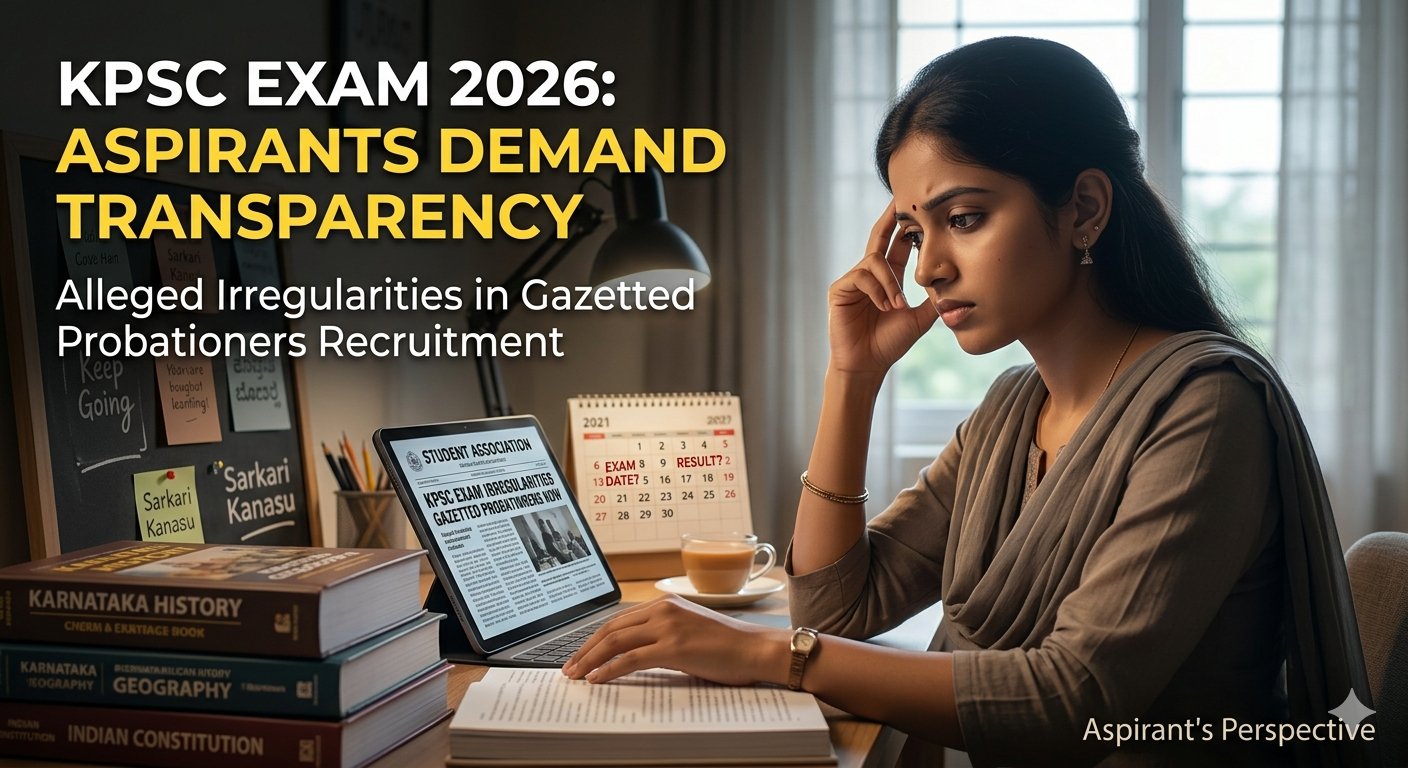
The Karnataka Public Service Commission (KPSC) is once again at the center of a massive controversy. For thousands of dedicated aspirants in Karnataka who spend years preparing for the Gazetted Probationers (Group A & B) exams, the recent allegations of fraud, nepotism, and irregularities have come as a devastating blow.
In this detailed report, we break down exactly what happened, the suspicious “consecutive serial number” pattern, the government’s response, and what the future holds for Sarkari Naukri aspirants in Karnataka.
The Spark: Suspicious Results and “Magic” Numbers
The controversy began in early March 2026, shortly after the KPSC released the results for 384 vacant Gazetted Probationer posts. While the announcement was initially met with relief, eagle-eyed candidates and student associations quickly noticed a statistical anomaly that seemed impossible to ignore.
In one specific examination hall, nearly 10 to 15 candidates with consecutive serial numbers all cleared the Mains exam. In the competitive world of KPSC, where every mark counts, the odds of an entire row of candidates qualifying is astronomically low. This led to immediate outcries from the All Karnataka State Student Association (AKSSA) and various coaching institutes, who labeled it a clear sign of malpractice or paper leakage.
Allegations of Nepotism and “Family” Success
Beyond the seat-number controversy, reports surfaced suggesting that multiple candidates with the same surnames or initials had cleared the exams from the same centers. Names like Hiremath, Pavitra, and Aishwarya appeared frequently in the merit list, leading to allegations of nepotism and favoritism within the commission.
While Revenue Minister Krishna Byre Gowda later clarified in the Assembly that many of these candidates were from different districts and not biologically related, the damage to the public’s trust had already been done.
The Political Firestorm: Demands for SIT and CBI
The Karnataka Legislative Assembly has been a battleground over this issue throughout March 2026. The Opposition, led by R. Ashoka and S. Suresh Kumar, has been vocal in demanding:
- A Special Investigation Team (SIT) Probe: To look into the digital security and human involvement in handling exam papers.
- Re-Examination: To ensure that only deserving, hardworking candidates make it to the final list.
- Impeachment of KPSC Members: To send a strong message that corruption will not be tolerated.
However, the State Government has resisted the call for a total re-exam, arguing that it would unfairly penalize the 5,500 candidates who wrote the Mains fairly and would delay the recruitment process by another two years.
The Government’s 6-Point Reform Plan
Recognizing that the KPSC’s reputation is at an all-time low, the Karnataka government announced a major overhaul plan on March 18, 2026. Here is what is changing:

- House Committee Formation: A special committee has been formed to recommend comprehensive reforms to the recruitment system.
- Annual Recruitment Calendar: Taking a leaf out of the UPSC handbook, KPSC will now have a fixed yearly schedule for exams to reduce pressure on aspirants.
- 5-Year Roadmap: A long-term recruitment plan to ensure vacancies are filled regularly rather than in massive, chaotic batches.
- Reduction in Members: The government plans to reduce the number of KPSC members from the current 15-18 down to 8 to improve accountability.
- Digital Security: Moving toward end-to-end digital encryption and reducing human interference in paper setting and evaluation.
- Adopting KEA Best Practices: The KPSC will look to the Karnataka Examinations Authority (KEA) for better translation standards and larger question banks.
Impact on Aspirants: The Mental Toll
For a typical student in Bengaluru, Dharwad, or Mysuru, a Government Job (Sarkari Job) is more than just a career—it’s a dream of stability. Many aspirants stay in cramped PGs, skipping meals and family events to study.
When news of a “KPSC scam” breaks, it doesn’t just affect the 384 posts; it destroys the motivation of lakhs of students preparing for FDA, SDA, PDO, and Group C exams. The fear that “money wins over merit” is a poison for any democratic recruitment process.
What Should You Do Now?
If you are an aspirant currently preparing for KPSC 2026 or 2027, here is our advice:
Don’t Stop Preparing: While the system is being reformed, the vacancies still exist. Keep your focus on your syllabus.
Stay Updated: Follow reliable sources and official government portals for news on the House Committee report.
Demand Transparency: Support peaceful movements that ask for digital reforms and better security in exam halls.
Final Thought for Aspirants:
Transparency is the backbone of any competitive exam. As the House Committee begins its investigation, we must remain hopeful that these reforms will finally create a fair environment for every hardworking student.

Conclusion
The KPSC fraud allegations of 2026 are a wake-up call for the Karnataka administration. While the government’s 6-point reform plan is a step in the right direction, only time will tell if these changes are enough to restore the “prestige” of the Commission.
Stay tuned to our blog for the latest updates on Karnataka Govt Jobs and KPSC exam news. Don’t forget to join our Telegram channel for instant alerts!
Discover more from Namma Govt Job
Subscribe to get the latest posts sent to your email.